



Cabbage
Filter by:
Cabbage Suppliers


Gardener's Supply is proud to be employee-owned. We are gardeners ourselves and have earned our customers' trust by providing high-quality products, expert information, and friendly, personalized service.
We understand the products we sell because we use them in our own gardens. Regular product training sessions and a gardening certification program for our staff help us provide the best service and support in the business.



Cabbage Pests & Diseases
- University of Kentucky - Cabbage Pests | Entomology
- Cornell University - Nonpathogenic Disorders of Cabbage fact sheet
- Texas A&M - Cabbage, Cauliflower, Brussel Sprouts, and Broccoli | Texas Plant Disease Handbook
- Clemson University - Cabbage, Broccoli & Other Cole Crop Insect Pests | Home & Garden Information Center
- Penn State - Cabbage (red, white, Savoy) | Diseases and Pests, Description, Uses, Propagation
Cabbage Growing Guides
- Michigan State University - How to Grow Cabbage - MSU Extension
- The Ohio State University - Growing Cabbage in the Home Garden | Ohioline
- University of Minnesota - Growing cabbage in home gardens | UMN Extension
- Penn State - Cabbage (red, white, Savoy) | Diseases and Pests, Description, Uses, Propagation
- Garden Savvy - How to Grow Cabbage
The cabbage family, Brassica oleracea, has been cultivated for thousands of years. A common theory is that wild cabbage was first cultivated in Europe and the Mediterranean before 1000 BC. Some accounts make it even older, with ancient China and Mesopotamia planting and harvesting the original varieties thousands of years before that. The ancient strains of the Brassica family of plants have been bred and developed into dozens of cruciferous vegetables, or cole crops. These include kale, broccoli, cauliflower, Brussels sprouts, kohlrabi, bok choy, and of course, the cabbages you see in the grocery store.

The cabbage family, Brassica oleracea, has been cultivated for thousands of years. A common theory is that wild cabbage was first cultivated in Europe and the Mediterranean before 1000 BC. Some accounts make it even older, with ancient China and Mesopotamia planting and harvesting the original varieties thousands of years before that. The ancient strains of the Brassica family of plants have been bred and developed into dozens of cruciferous vegetables, or cole crops. These include kale, broccoli, cauliflower, Brussels sprouts, kohlrabi, bok choy, and of course, the cabbages you see in the grocery store. Cabbage is commonly used raw as part of a salad, or to make coleslaw. Cabbage can be pickled for sauerkraut or kimchi. It can also be boiled, sautéed, stir-fried, steamed, or roasted, depending on the dish being prepared. Different types of cabbage rolls are very common in many cultures across the globe.
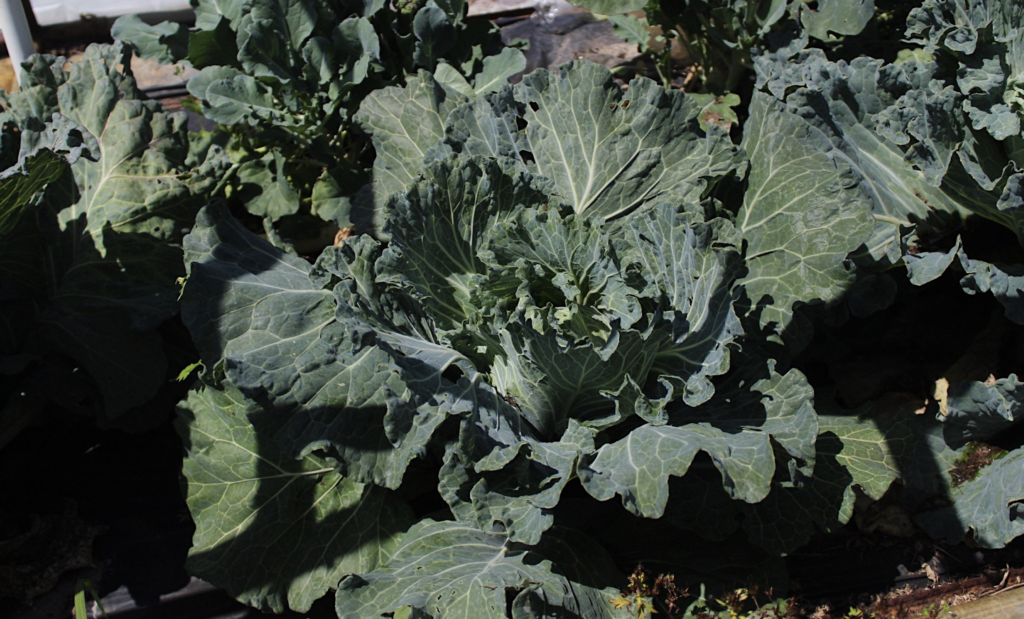
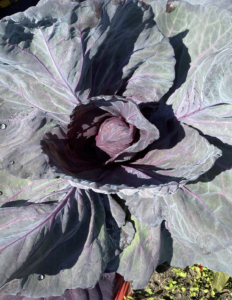
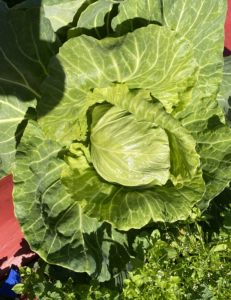 The basic types of cabbage are the large round-headed green and red cabbage, savoy cabbage, and Napa cabbage. Red and green cabbage both have a peppery flavor when raw, which becomes sweeter when cooked. These types are interchangeable for cooking purposes, except to note that cooked red cabbage can stain the color of other foods it is cooked with. Savoy cabbage is also a round variety but it’s much darker green in color than the other type, the flavor is sweeter and the leaves are softer.
Napa cabbage is an Asian strain, sometimes called Chinese cabbage (not to be confused with bok choy, which is also sometimes called Chinese cabbage). It’s longer, oval in shape, much like a head of Romaine lettuce, and the flavor is sweeter than the other kinds. All of these basic cabbages come in different heirloom and hybrid varieties.
Cabbage is very high in vitamin C and vitamin K, is a good source of vitamin B6, and folate, and is high in fiber. It’s an extremely healthy vegetable, a really good source of nutrition. It’s commonly used to aid digestion and can reduce cholesterol.
- Cabbage (Brassica oleracea var. capitata)
- Annual (biennial)
- Full sun
- Soil should be slightly acidic (6.5 to 7.0 ph)
- Rich loamy soil, with good compost
- For direct garden seeding, start three or four weeks before the last frost.
1/2” deep
1 foot apart
Thin to two feet apart when four to six weeks old
- Or, Best practice is to start seedlings indoors about six weeks before the last frost
plant in the garden 2 weeks after the last frost
plant 2 feet apart
- Growing in containers:
Single plants in 12″ deep, and 12″ wide pots, spaced 12″ apart or more in
larger pots
- Rows should be up to 36″ apart
- Water regularly, keeping the soil moist.
- Climate Zones 1-10
Cabbage is generally a cool weather crop, with the best temperature range between about 60 and 70°F. That said, somewhat cooler or warmer temperatures are ok, for most types of cabbage, and there are many varieties bred to be heat or cold tolerant. Cabbage is usually planted or started in early spring, but success can be found when planting in midsummer for harvest in the fall. Timing is important for summer planting, to be completely sure that they will fully mature before any freeze.
For garden planting in the spring, it’s a good idea to start the seeds indoors, six weeks before the last frost. They should be planted 1/2” deep, with two seeds per container. If grow lights are not used, seedlings need 6 or more hours of sunlight each day. Once they sprout, thin them by removing the one plant from each container, once they are an inch tall or a bit more. Keep the largest, healthiest, sprout for each. When the time comes, and when each plant is about 3-4 inches tall, plant the seedlings in the garden. Larger plants need more room! Good, well-composted soil is important, these plants need lots of nutrients. It’s also important to water cabbage on a regular basis if you get less than an inch of rain every week.
 For cabbages grown in containers, it’s best to grow seedlings and transplant these into larger containers. For best results, start the seeds as above, and transplant each seedling into a large 5-gallon (12” wide, 12” deep) pot, with good potting soil and drainage. If desired, a larger container can be used for multiple plants in the same pot, but space them each one foot apart, minimum. Good nutrition and regular watering are even more important for container gardening! Keep the soil moist, with good drainage.
For your garden cabbage, companion plants are something to think about. Celery is a good choice, as it discourages some pests like cabbage moths. Lettuce and spinach, as well as herbs like basil, thyme, and dill also grow well and help with cabbage. Herbs like lavender, yarrow, chives, and mint attract pollinators and ladybugs, and ladybugs will help keep aphids under control.
 Preventing pests and diseases is something else to plan for! Aphids can be removed with a soapy water spray, and the plants treated with a neem oil spray if it becomes a big problem. Cabbage worms (the larvae of cabbage moths), can be picked off by hand, or use BT spray. Wear gloves, and get rid of them away from your garden, these are not the nicest creatures! Like other cole crops such as broccoli or Brussels sprouts, clubroot and downy mildew can both be an issue. Clubroot symptoms include yellowed and wilted leaves and enlarged roots. If this happens, there is no treatment except to remove and dispose of the plant, carefully. Do not compost, infected plants must be removed from the garden completely. It’s a good idea to add lime to your soil where the infected plants were, in the fall. This will make the soil more alkaline, which will help to prevent a recurrence. Downy mildew will show as yellowish spots, with a light-grayish growth later on. This disease can be treated with copper fungicides. For all of these diseases, rotating your crops can be a good way to prevent them.
Harvesting cabbage should be done at the best time. The cabbage heads should be solid, not soft. Squeeze the head, and when it feels completely firm, it’s ready. Cut the cabbage completely below the head, leaving a few leaves growing on the stem. The cabbage is ready to eat, right away!
